

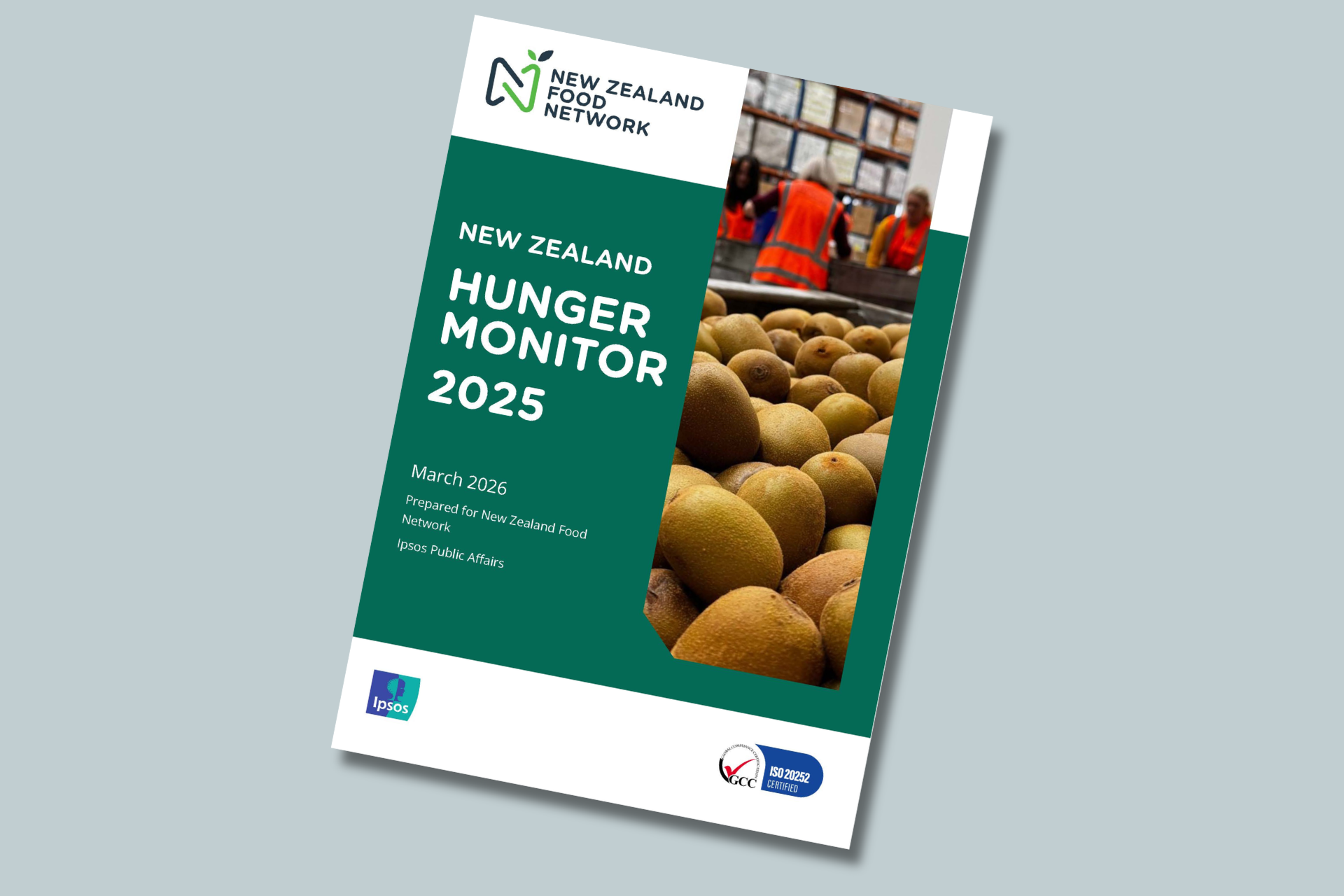
- One in three (33%) New Zealand households have experienced some form of food insecurity in the last year
- Just under a third of full-time workers report experiencing food insecurity in New Zealand (30%)
- Two-thirds (68%) of food insecure households reported that they experienced food insecurity for the first time within the last 12 months
- Many Kiwis are hesitant to access food support, with nearly half (49%) of those who are food insecure citing shame or embarrassment as the reason.
New research from New Zealand Food Network (NZFN)’s inaugural Hunger Monitor reveals a significant shift in the scale of food insecurity across Aotearoa, with 30% of full-time workers reporting facing food insecurity at some point in the last 12 months.
The research, canvassing the views of 3,000 Kiwis between 24 November – 9 December 2025, sought to assess the prevalence of food insecurity in Aotearoa New Zealand. The nationally representative sample examined the condition, characteristics and coping behaviours associated with food insecurity, with the findings demonstrating that a significant number of households are unable to afford enough food.
While nearly half (48%) of low-income households reported facing food insecurity, families across the income spectrum were struggling to put food on the table. Around 30% of medium-income earners and 12% of high-income earners were found to be food insecure, demonstrating that even some earning above New Zealand’s average household income struggle to afford enough food.
Overall, a third (32%) of Kiwi households report finding it difficult or very difficult living on their present income. This comes as the latest Food Price Index recorded the highest monthly rise in food prices in four years (2.5%).
Shrinking trolleys felt by all communities
Among food insecure respondents, around two thirds of Pākehā (68%), Asian (66%) and Māori (64%) individuals said they had been unable to afford enough food for the first time in the last year, alongside almost three quarters of Pacific Island respondents (73%).
Furthermore, while rural areas may pose greater challenges around food supply and food support access, respondents in urban centres were also feeling the sting. Among respondents who reported facing food insecurity, 7 in 10 Wellingtonians (72%) and Aucklanders (71%) said they weren’t able to afford enough food for the first time over the past year – on par with residents in the West Coast (71%) and Nelson, Tasman and Marlborough (70%) regions.
“There has long been a stigma and pre-existing biases around food insecurity in Aotearoa, but our research confirms that food insecurity isn’t just isolated – it is pervasive and impacting people from a diverse range of backgrounds, often through circumstances beyond their control,” says Gavin Findlay, Chief Executive of NZFN.
“Sadly, these numbers confirm what we've suspected over the last couple of years. Every day, our Food Hubs see the people behind the data – from hard workers who never expected they’d need support, to double-income families unable to keep up with the rising cost of living, and everyone in between.”
Shame and embarrassment named as top barrier to seeking support
While Aotearoa has a dedicated ecosystem of food relief services available, Kiwis report facing significant social barriers to accessing this relief. Nearly half (49%) of those who are food insecure cite shame or embarrassment as a reason why they would hesitate to seek support, highlighting how public perceptions may cause some families to struggle in silence.
The other main barriers reported were thinking that there would be others in greater need of assistance (43%) and feeling unsure whether they would be eligible to receive food relief (35%), once again demonstrating how food insecurity is a deeply personal and nuanced issue which requires empathy, transparent communication, and education to address.
Demand outstrips resources, leaving a critical gap
Findlay believes that formally quantifying the current need – something Aotearoa has known anecdotally for a long time – highlights the urgency of the issue and the critical role of the food support sector in addressing the gap.
Since its establishment with funding from the Ministry of Social Development at the onset of the pandemic, NZFN has seen demand for food support increase, while resources across the sector struggle to keep pace. The Hunger Monitor findings illustrate this, with a quarter (25%) of severely food insecure households saying the support they receive does not meet their needs.
Susie Robertson, Chief Executive at Wellington’s Kaibosh Food Rescue, says, “Being the oldest dedicated food rescue charity in Aotearoa, we’ve seen hunger creep further into our communities and now they’ve reached critical levels.
“We’re grateful for the partnerships and collaboration across the support sector which enable us to do the mahi we do, but it’s getting more difficult to keep up with demand and budgets tighten on all sides.”
Findlay adds, “Our hubs and the communities they serve are a constant reminder of why we must continue ensuring good food reaches those that need it the most. Every piece of the puzzle – from the corporates who use us as a solution to their surplus goods, to the public sector, to the volunteers – is vital for our support ecosystem, and NZFN is proud to be at the centre of that.”
“However, addressing hunger at this scale requires support beyond what any one organisation can provide. The current demand for food relief highlights the need for sustained investment in the infrastructure that enables the food support sector to operate effectively and at scale. Without that commitment, communities already facing rising living pressures will feel the impact most acutely. This is a shared challenge and we cannot do it alone.”