

- One in three (31%) New Zealand households have experienced moderate or severe food insecurity in the last year
- Nearly nine in ten food-insecure households (87%) can't afford balanced meals at least some of the time
- Only 38% of food-insecure households with children can afford to give their kids balanced meals, compared to 97% of food secure families
- More than half (54%) of severely food-insecure Kiwis rate their mental health as fair or poor, compared to just 15% of highly food secure Kiwis.
New research from the New Zealand Food Network (NZFN) reveals that food insecurity remains an entrenched crisis in Aotearoa and the pressure shows no sign of easing.
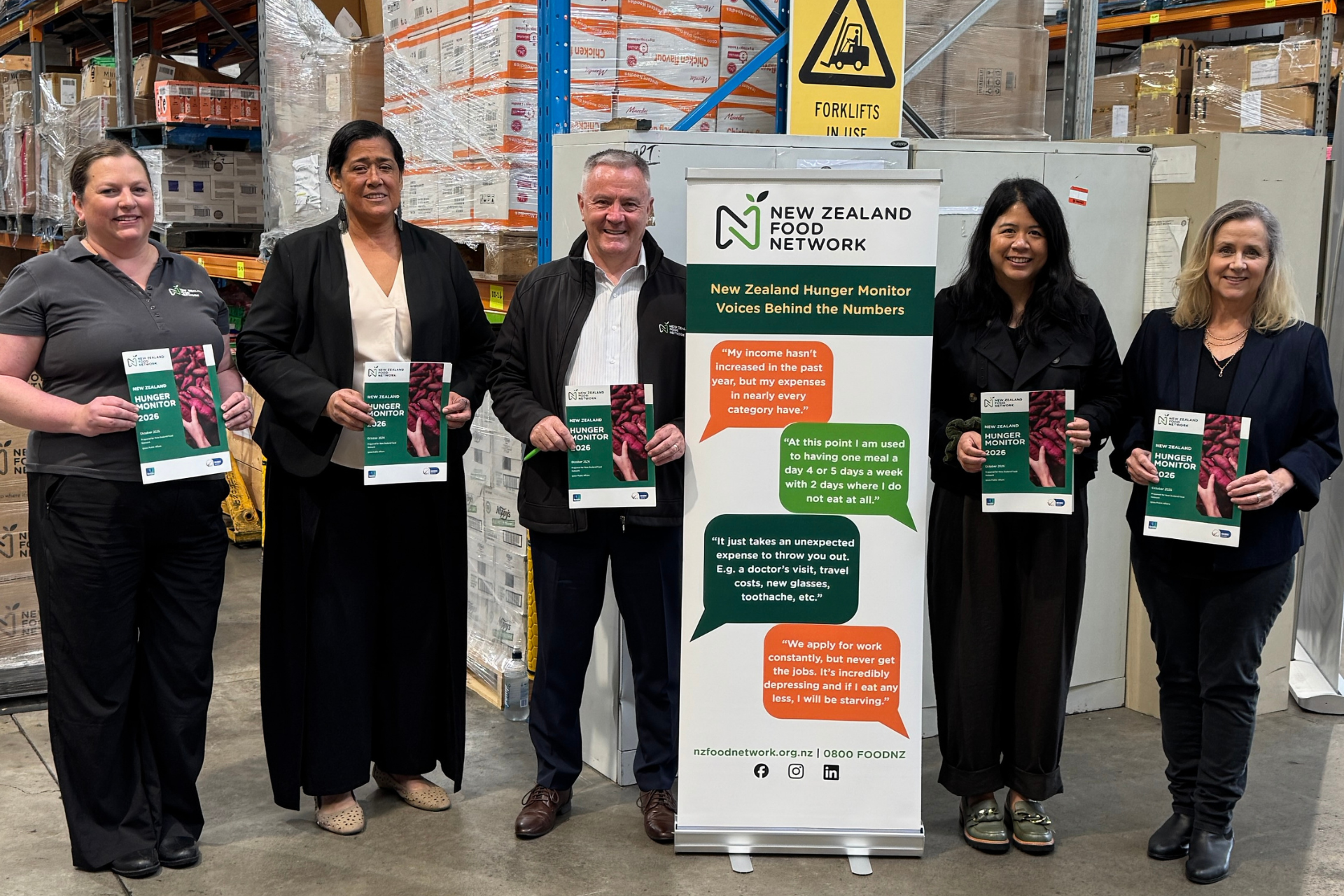
The findings come from NZFN’s second annual Hunger Monitor, conducted by Ipsos, which surveyed 3,000 Kiwis between 27 July and 20 August 2026 to assess the prevalence, severity, and human impact of food insecurity.
The study confirms one third of households (31%) experienced food insecurity in the last year, a figure statistically unchanged from 2025. In 2026, 14% of respondents said they faced moderate food insecurity (forced to compromise on quality, variety, or nutrition), while 17% suffered severe food insecurity (enduring disrupted eating patterns and frequently skipping meals).
NZFN CEO Gavin Findlay says food hardship has become a persistent reality for far too many Kiwi families.
“Access to food should never be uncertain yet food insecurity continues to be a significant and persistent issue affecting New Zealanders across the country, from the young family next door to the older retired couple down the street,” he says.
“The latest Hunger Monitor findings highlight, once again, the need for continued support from Government, businesses and the community to ensure food reaches those who need it most.”
Food insecure Kiwis more likely to have worse health
The research findings also show the impact of hunger extends far beyond the dinner table. Almost half (45%) of severely food-insecure respondents rated their physical health as poor or fair. In comparison, just one in five (19%) Kiwis who are highly food secure rated their physical health the same.
The psychological strain is even starker: 54% of severely food-insecure individuals rate their mental health as poor or fair. In contrast, food-secure Kiwis are vastly more likely to describe their mental wellbeing as good, very good, or excellent.
Nearly nine in ten (87%) food-insecure households say they can't afford balanced meals at least some of the time. In food-insecure households with children, 58% stated they were unable to afford to feed their children balanced meals often (11%) or sometimes (47%).
NZFN CEO Gavin Findlay says the latest Hunger Monitor findings reveal the far-reaching impacts that food insecurity is having on people across the nation.
“The Hunger Monitor shows the physical and mental health toll facing many food-insecure New Zealanders. When you're constantly worrying about where the next meal comes from, it can wear down every part of your wellbeing.”
Pressure falls heaviest on vulnerable households
While food hardship impacted people across Aotearoa, the 2026 Hunger Monitor shows the burden continues to fall heaviest on single parents, Pacific communities, disabled Kiwis, and renters.
The report found:
- 64% of single-parent households experienced food insecurity in the past year, slightly down from 70% in 2025
- Close to three in five (59%) of Pacific peoples reported living in a food-insecure household
- 53% of renting households struggled to consistently afford food
- 48% of low-income households experienced food insecurity
- 42% of households with a disabled member experienced food insecurity (compared to 28% without).
While slightly fewer households reported persistent, long-term hardship compared to last year (6% in 2026 vs 8% in 2025), food insecurity remains a recent issue for many. Two in three (66%) food-insecure households reported that they only began going without enough food in the last 12 months.
“These are households already stretched to their absolute limit, with zero financial buffer to absorb a rent hike, energy bill, or price rise,” Findlay explains. “It shows just how quickly circumstances can change for a family.”
Stigma remains the primary barrier to seeking help
Awareness of food support services has slightly improved, with 58% of Kiwis now knowing where to turn for help (up from 54% in 2025). Despite this, formal support reaches only part of those in need: just 23% of food-insecure households received formal food support in the past year.
Social stigma continues to be the single biggest obstacle: 46% of food-insecure respondents cited feelings of shame or embarrassment as the reason they hesitated or refrained from seeking help. Other major barriers included believing others were in greater need (38%) and uncertainty over eligibility (37%).
For those who did receive support, 30% reported that the relief was insufficient to cover their household's basic needs.
Findlay stresses that food insecurity requires urgent, collective action to break down social stigma and properly resource the support sector.
“The Hunger Monitor confirms what we see every single day - the need is real and it is persistent,” Findlay says. “We need a collective commitment across government, business, and local communities to make sure food reaches those in need.”