

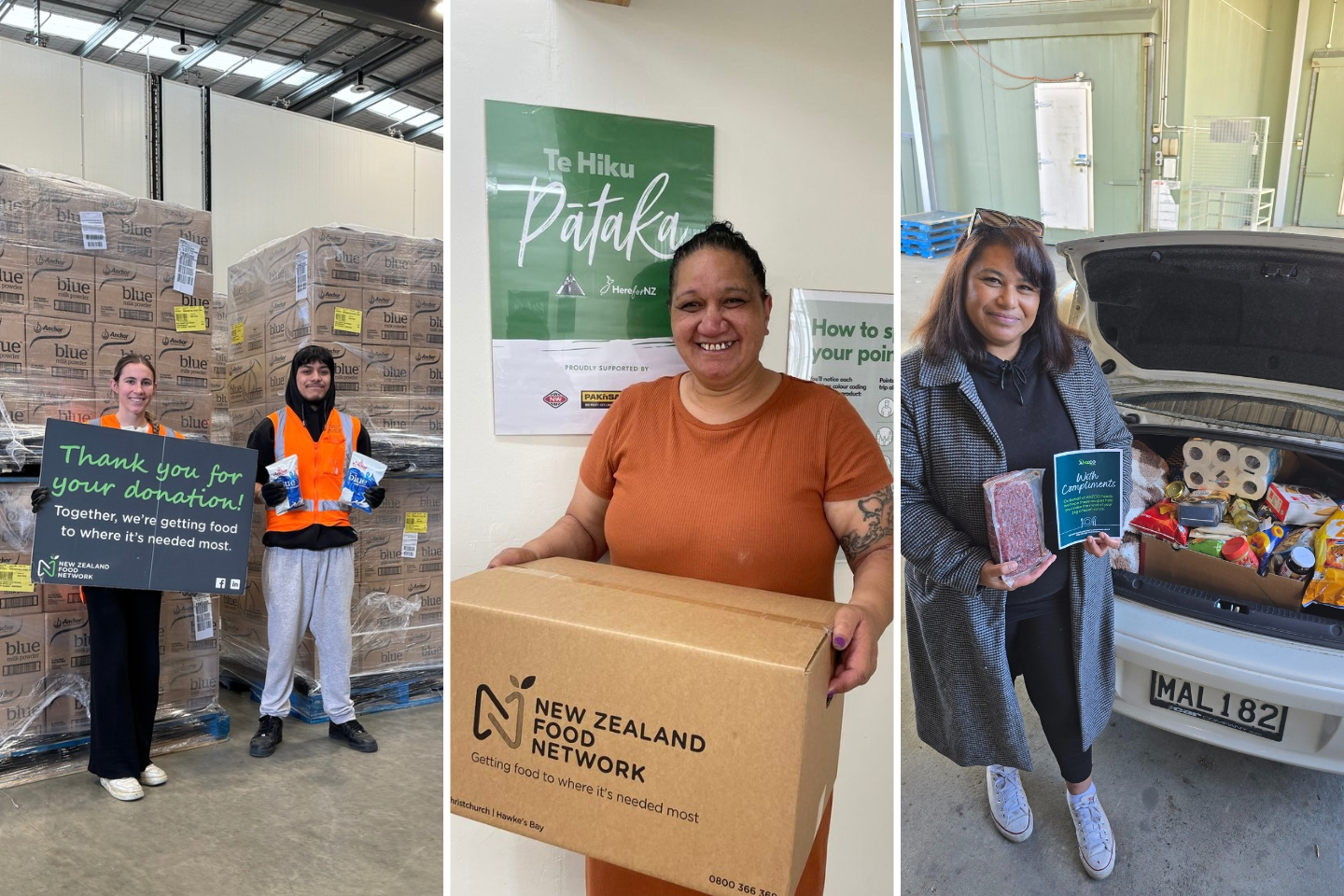
The New Zealand Food Network (NZFN) has just hit a major milestone, distributing the equivalent of 100 million meals to communities across Aotearoa since the organisation was founded in July 2020.
As New Zealand’s largest bulk food rescue and distribution network, NZFN connects food producers, growers, and manufacturers with surplus stock directly to frontline food hubs, iwi, and community organisations across the country. Reaching this milestone highlights the immense scale of collaboration across New Zealand’s food sector, often behind closed doors, to get surplus food to where it is needed most.
NZFN Chief Executive Gavin Findlay, who has led the organisation since its inception, says the achievement is a moment to pause, reflect on the persistent need in communities, and recognise the massive collective effort which made it possible.
"Distributing the equivalent of 100 million meals is a significant milestone, though it’s one we view with reflection rather than celebration," says Findlay.
"This is a powerful testament to what happens when New Zealanders pull together. It speaks to the generosity of our food industry and the strength of a nationwide network determined to ensure good food feeds people, not landfills."
Findlay notes that getting this volume of food onto plates across the motu has only been possible through the combined mahi of hundreds of organisations and individuals, and by annual funding through the Ministry of Social Development’s Food Secure Communities programme.
"Every single meal represents a chain of generosity and hard work," says Findlay. "It starts with the growers, manufacturers, and retailers who donate surplus stock. It continues with our funders, logistics partners, volunteers, and our dedicated NZFN team who procure, pack, and distribute food every week, and finishes with the frontline food hubs doing incredible work in their local communities.
"We are immensely proud of what our partners and team have achieved together since 2020.”
This comes after NZFN launched the second annual Hunger Monitor in October 2026 which revealed that food insecurity continues to affect nearly one third of Kiwi households (31%).
According to the 2026 report, awareness of food support services has improved slightly, with 58% of Kiwis now knowing where to turn for help, up from 54% in 2025. Despite this, formal support reaches only a fraction of those in need: just 23% of food-insecure households had received formal food support in the past year.
While the milestone represents an immense number of meals provided to homes in need across Aotearoa, the research shows that many people experiencing food insecurity are still missing out on support.
“For every family NZFN and our partners has supported, there are many more still carrying the mental weight of wondering where their next meal is coming from.”
Findlay notes that there’s more to food insecurity than hunger. ”It’s the worry parents carry when they’re not sure how they’ll provide for their children, and the many other difficult choices families are forced to make each day. These choices are often made silently, and often through no fault of their own."
The scale of food distributed proves what can be achieved through collaboration, but also the scale of the need that remains.
“Food insecurity is persistent, and both the Hunger Monitor and hitting the 100 million milestone shows that the need is real and not going away anytime soon. It is only with the support of government and the generosity of partners that NZFN has been able to lift some of that burden, but ultimately, no one should have to carry it in the first place.”